
‘Breakthrough’ claimed for sustainable reuse of industrial NBR rubber
21 Mar 2026
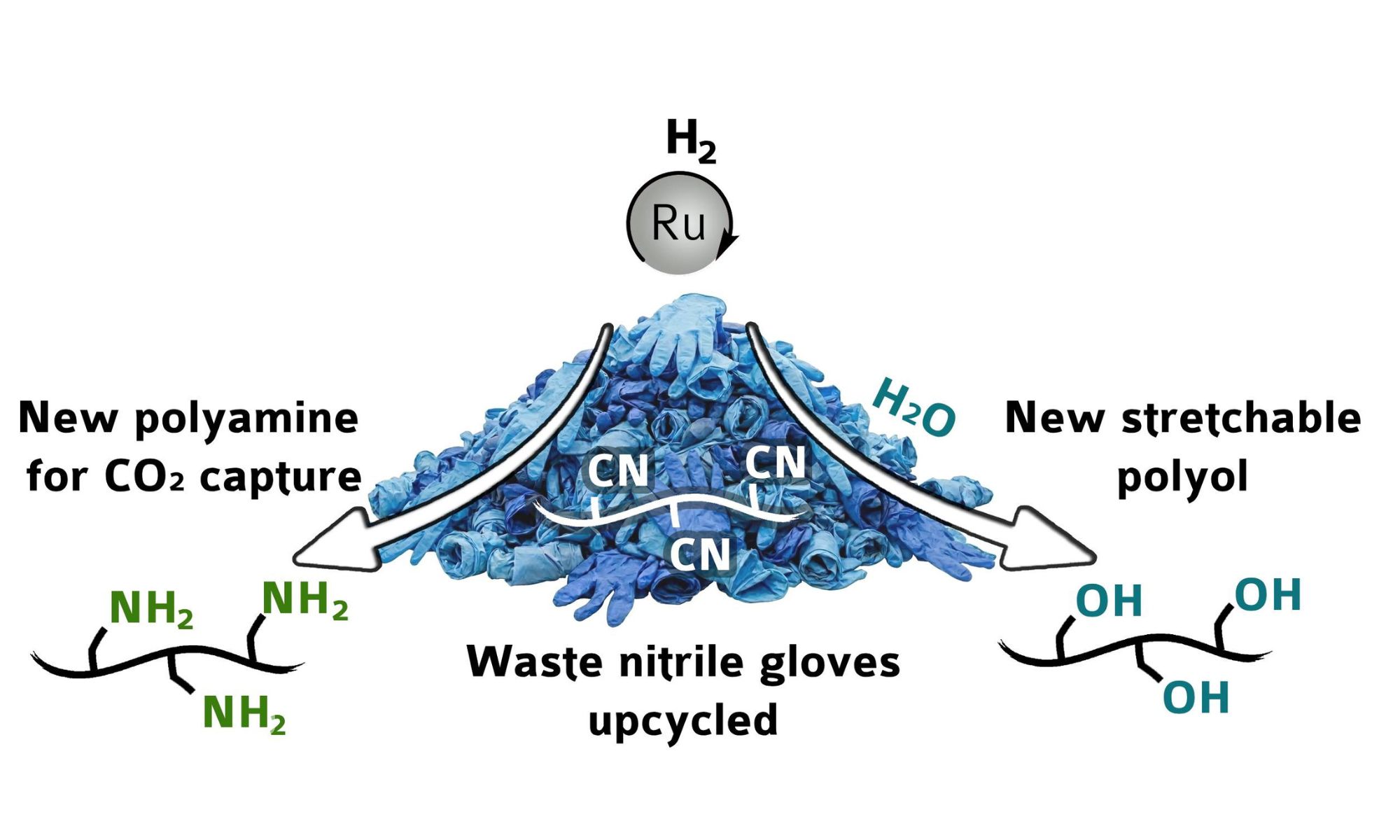
Two pioneering techniques for the sustainable use of nitrile rubber products as new carbon dioxide-capturing materials have been unveiled by the University of St Andrews.
Nitrile butadiene rubber (NBR) is present in a wide range of industrial products, notably disposable gloves, seals, and various technology parts.
However, its thermoset nature has created challenges to reuse. Less than 2% is currently recycled with most consisting of low-value downcycling.
The size of the NBR market meanwhile stands at 36 million tons or $2.5 billion globally per year, said St Andrews researchers, creating a significant addition to the global problem.
Writing in the German Chemical Society (GDCh) journal Angewandte Chemie, researchers from the university’s School of Chemistry said they had developed two ways to chemically?recycle NBR and turn it into useful new materials.
They described how they employed a ruthenium catalyst and hydrogen gas to ‘unlock’ the chemical bonds in NBR and convert it into either polyamines?or polyols, depending on reaction conditions.
While the process to make polyamines works at temperatures as low as 35 °C, polyols production requires higher temperatures and also achieves excellent efficiency, they reported.
The polyamines were shown to capture CO?, with their amine groups binding carbon dioxide to form stable compounds, a process widely employed in industrial carbon-capture technologies.
This made possible the use of recycled materials to remove CO? from emissions or the atmosphere, combining plastic recycling with climate action, the researchers added.
Sustainable chemical recycling or upcycling routes to convert NBR into valuable chemicals or materials would be a huge leap towards greater sustainability, said lead author Dr Amit Kumar from the School of Chemistry.
He stated: “We are thrilled by this discovery, which lets us turn nitrile glove waste from chemistry labs into valuable new materials. With further development, this technology could tackle two of the planet’s biggest waste problems at once: plastic pollution and carbon dioxide emissions.”
Pic credit: Amit Kumar
