
UK built detector components arrive in US for flagship neutrino experiment
4 Mar 2026
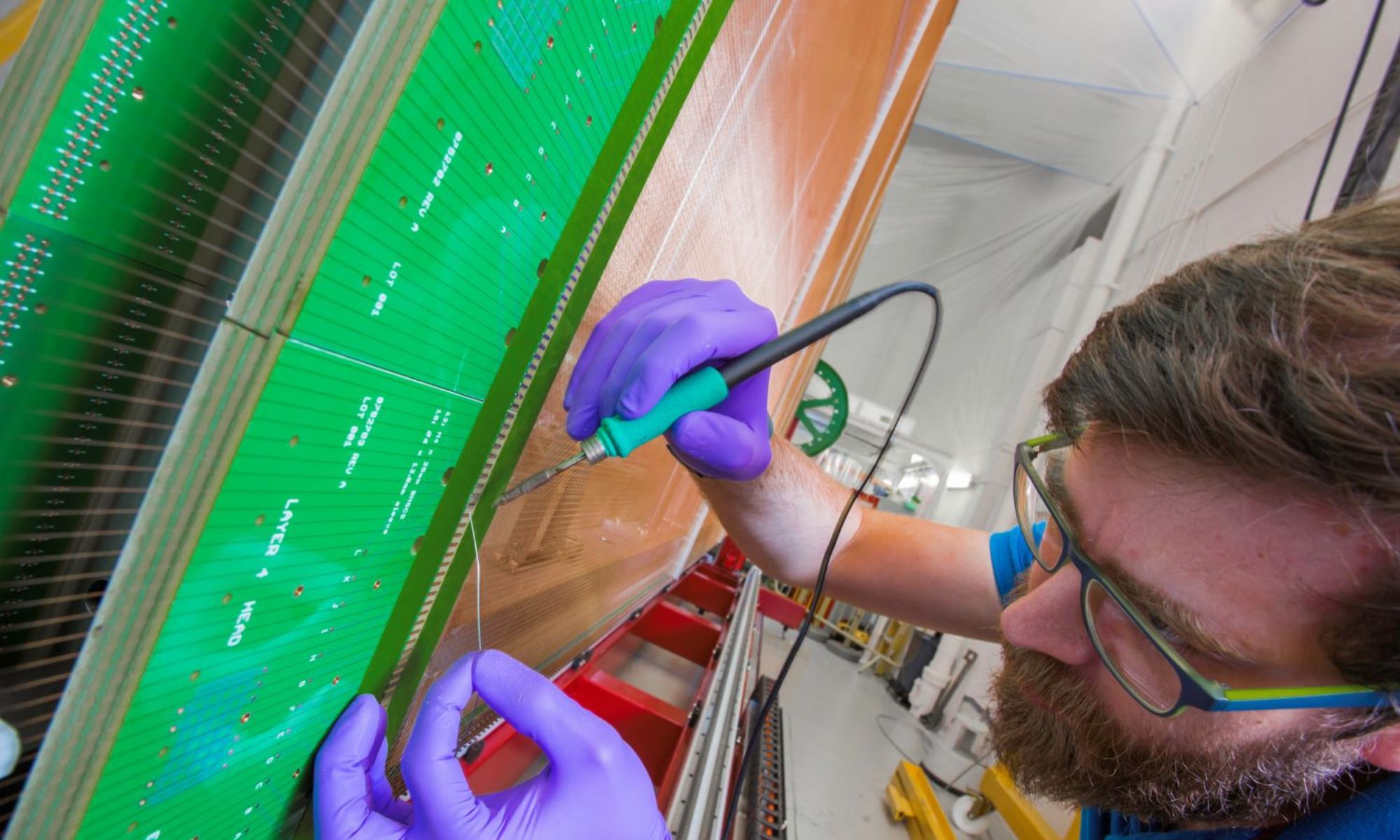
Four ‘building-sized’ components which will play an essential role in the UK contribution to an ambitious international physics project have been shipped to the United States from the Daresbury Laboratory.
The anode plane assemblies (APAs) delivered to the Deep Underground Neutrino Experiment (DUNE) represent the first of many earmarked for the US Fermi National Accelerator Laboratory (Fermilab).
When DUNE’s construction is completed, it will send a beam of neutrinos 1,300 kilometres across the country in a mission to explain some of the most fundamental questions in physics.
Teams at the UK laboratory, based at Sci-Tech Daresbury in the Liverpool City Region close to Warrington, have completed 50 APAs to date. In total, the UK will supply 137 APAs out of the 150 required for the project.
Head of technology at STFC’s Daresbury Laboratory Ian Lazarus said:
“The arrival of the four APAs at Fermilab in the US represents a key milestone for the UK’s contribution to the Deep Underground Neutrino Experiment. These components will now undergo testing at Fermilab before being installed in the enormous underground detectors that form the heart of DUNE.”
The APA detector frames measure 6.3 by 2.3 metres – “comparable in height to a two-storey building” – with 24 kilometres of ultra-fine copper-beryllium wire the width of a human hair wound across each, secured by thousands of hand-soldered connections.
When situated inside DUNE’s liquid-argon detectors, they will record the electrical signals produced when neutrinos interact with the detector.
For their 6,000km journey, the APAs were mounted inside two specially designed shipping frames. On arrival at Fermilab they will undergo testing before being prepared for installation in the DUNE Far Detector 1, situated 1,300 km away at the Sandford Underground Research Facility in South Dakota.
DUNE will send a beam of neutrinos from Fermilab’s location in Illinois to a detector complex at Sanford.
The aim of the experiment is to explore why matter dominates over antimatter in the universe, study neutrinos’ behaviour and observe any signals from supernovae.
The detectors will contain tens of thousands of tonnes of liquid argon, with the APAs capturing faint electrical signals produced by neutrino interactions.
Lead engineer for the DUNE project at the Daresbury Laboratory Dr Radosav Pantelic said:
“Designing and preparing detector components of this scale and sensitivity for their journey overseas has required extraordinary care and teamwork, and I’m immensely proud of the dedication and expertise shown by our engineers and technicians at Daresbury Laboratory.”
In addition to the detector planes, UK teams are also contributing to other major components of the DUNE and Long-Baseline Neutrino Facility infrastructure.
